Physical Address
304 North Cardinal St.
Dorchester Center, MA 02124
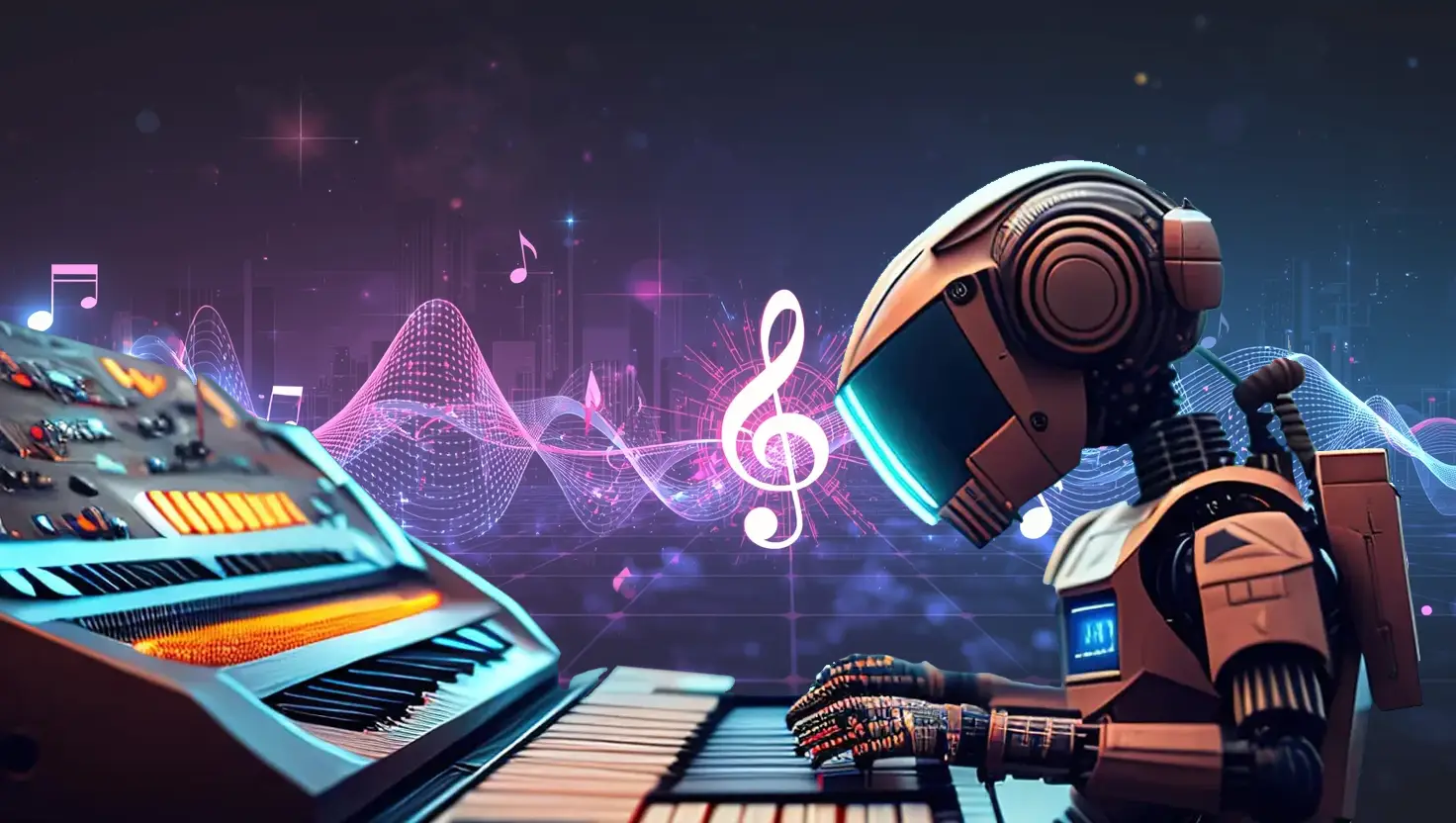
As artificial intelligence (AI) continues to evolve, its integration into the music industry is sparking debates among analysts, creators, and industry leaders. From revolutionizing music production to challenging traditional notions of creativity and copyright, AI’s role in music is rapidly expanding. The question on everyone’s mind is: what does the future of AI and music hold?
AI’s influence on music production is undeniable. Tools like OpenAI’s MuseNet, Google’s Magenta, and AIVA (Artificial Intelligence Virtual Artist) are enabling musicians to generate melodies, harmonies, and even entire compositions with minimal input. These systems analyze existing music, learn patterns, and create new compositions in virtually any genre.
Producers are leveraging AI for mastering, mixing, and sound design. AI-powered software can analyze a track and make adjustments to EQ, levels, and dynamics in real-time, reducing production time and cost while maintaining professional quality.
Emerging AI tools also allow for collaboration between human musicians and AI “co-creators.” For example, singer-songwriter Holly Herndon has used AI vocals and generative music systems in her latest album, blending human and machine creativity in experimental ways. “AI is another instrument,” Herndon told Pitchfork. “It’s about using technology to extend what music can be, not replace it.”
Despite its advantages, AI’s role in music production is not without controversy. Critics argue that AI-generated music lacks the emotional depth, imperfections, and nuance that human musicians bring to their work. Jacob Collier, a Grammy-winning musician, expressed concerns about AI’s tendency to produce “too perfect” music. He warned that over-reliance on AI could diminish the authenticity that defines truly compelling compositions.
Some artists fear that AI could devalue human creativity and lead to job displacement in the industry. As AI-generated tracks flood streaming platforms, independent human artists may struggle to compete with high-volume, algorithmically created music.
Yet supporters argue that AI is a tool, not a replacement. Industry leaders like Taryn Southern, an early adopter of AI in pop music, emphasize that AI can accelerate experimentation, allowing artists to focus on lyrical, emotional, and performance elements while AI handles repetitive technical tasks.
The integration of AI into music production raises significant legal questions. In a landmark 2025 ruling, the U.S. Copyright Office stated that AI-generated works cannot be copyrighted unless substantial human intervention is involved. This emphasizes the importance of human authorship in maintaining intellectual property rights.
Additionally, the rapid development of AI has outpaced legal frameworks, leading to disputes over the use of copyrighted material in training datasets. Some advocacy groups are calling for stricter protections to ensure that original artists’ rights are not violated.
Record labels and streaming services are also navigating these challenges. Sony Music, Universal, and Warner Music Group have begun creating internal guidelines for AI use, ensuring that AI-generated music credits human collaborators and respects existing copyrights.
AI is impacting multiple genres in unique ways. In classical music, AI tools are helping composers generate orchestral arrangements, while electronic musicians use AI to create innovative beats and synth textures. Even hip-hop artists are experimenting with AI-generated backing tracks and melodic hooks.
Platforms like TikTok, Spotify, and Apple Music employ AI-driven recommendation systems that personalize music for listeners, influencing trends and even the kinds of songs artists produce. While this personalization enhances user experience, it also raises concerns about algorithmic homogeneity, where AI may favor certain formulas over creative risk-taking.
The AI revolution is not limited to the U.S. or Europe. Asian markets, particularly Japan, South Korea, and China, are investing heavily in AI-powered music tools. K-pop agencies, for instance, are experimenting with AI-generated choreography and sound design to complement human performances, creating highly polished content for global audiences.
In live performance, AI is being integrated into concerts for real-time sound mixing, virtual performers, and interactive audience experiences. Artists like Imogen Heap are exploring AI-driven wearables that translate movement into music, creating immersive experiences that merge human performance with AI-generated soundscapes.
While AI provides new opportunities, it also raises ethical questions. How much creative credit should be given to AI? Who owns AI-generated content? And how do we preserve the authenticity and emotional resonance of music in an increasingly automated landscape?
Some argue for a hybrid approach where AI serves as an assistant rather than a creator, ensuring that human musicians remain at the core of artistic expression. Music educators are now incorporating AI literacy into curricula, preparing the next generation of musicians to collaborate with machines ethically and creatively.
Experts predict that the future of AI and music will be defined by collaboration rather than competition. Human artists and AI are expected to co-create, with AI handling technical tasks and humans providing vision, emotion, and storytelling.
Emerging trends for the next decade include:
The future of AI and music is dynamic and multifaceted. While it presents challenges in creativity, copyright, and authenticity, it also opens up unprecedented opportunities for innovation, collaboration, and audience engagement. The key will be balancing human artistry with AI assistance, ensuring that music remains both expressive and accessible.
As AI continues to evolve, the music industry stands at a crossroads: one path amplifies human creativity through AI, the other risks over-reliance on automation. Industry stakeholders, artists, and audiences will play pivotal roles in shaping this future.