Physical Address
304 North Cardinal St.
Dorchester Center, MA 02124
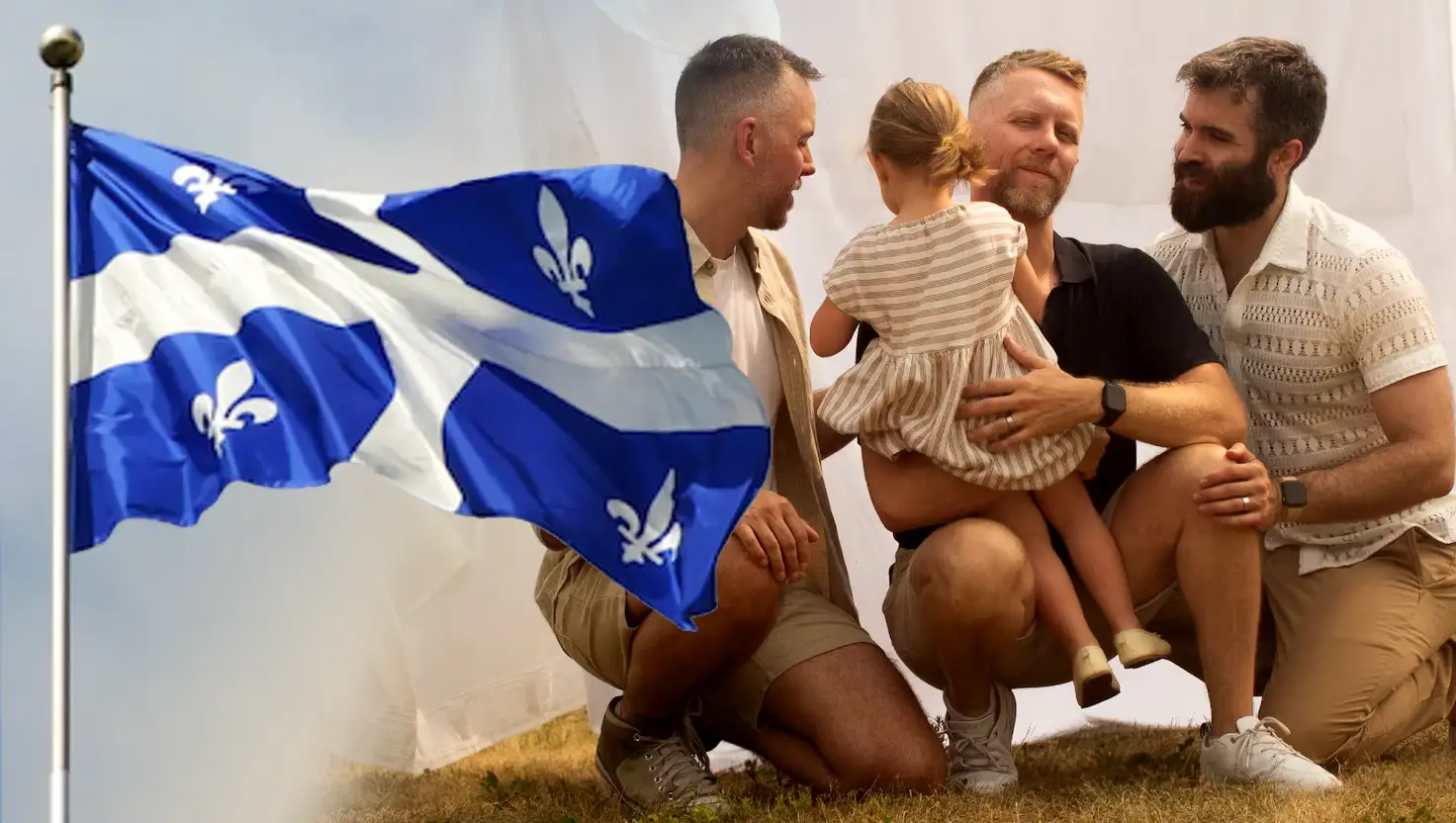
A gay throuple in Quebec is now pushing for three-parent recognition after adopting their daughter. The trio wants all three men to hold legal parental status under Quebec’s laws.
A gay throuple in Quebec is now pushing for three-parent recognition after adopting their daughter. The trio wants all three men to hold legal parental status under Quebec’s laws.
When LeBlanc, Bédard, and Maheu finalized their adoption, they celebrated a personal victory. Yet Quebec still refuses three-parent recognition. Currently, only two of them can be listed on the child’s birth certificate. The third, although a parent in practice, has no legal standing.
Families with more than two caregivers are not new. Yet provincial statutes in Quebec rigidly enforce two-parent limits. This case confronts legal parenthood in Quebec head on. Advocates say the law fails modern family reality.
In April, a Quebec Superior Court judge ruled that excluding families with more than two parents is discriminatory under Canada’s Charter of Rights and Freedoms. That decision demanded changes to the civil code to permit multi-parent families. But the provincial government has appealed, arguing that the two-parent model preserves legal clarity.
The trio’s legal team contends that three-parent recognition is essential to enforce their adoption rights and protect the child’s best interests. They argue the law must evolve with changing family norms.
Quebec’s refusal to grant full parental status to the third man affects many real-life issues: medical consent, inheritance, custody, tax benefits, social assistance, and parental obligations. Without official status, the third parent may be excluded from key decisions or legal claims.
This dispute highlights a tension between established legal structure and constitutional equality. The government argues that only two legal parents keep the system simple. But critics say that rigid structure denies rights to families that don’t fit traditional molds.
Because the appeal moves the case upward, watchers expect that if Quebec loses, it may be forced to revamp statutes across multiple legal domains. Legal experts suggest this case could reach the Supreme Court, potentially setting a binding standard for three-parent recognition across Canada.
Already, provinces like Ontario, British Columbia, and Saskatchewan permit more than two legal parents in certain cases offering models for family law reform. (See reporting from Them) Them
If Quebec changes course, it could become the first French-majority province to legally recognize multi-parent families broadly. Such recognition would reflect shifting social norms and strengthen LGBTQ+ parental rights.
Quebec law currently recognizes only two legal parents, leaving the third partner excluded from formal parental status, even though the trio lives and raises the child together
The adoption was far from smooth. The trio report that some adoption agencies refused to consider them because they are three men. Despite that, they persevered for years. New York Post+1
LeBlanc says,
“She’s perfect curious, energetic, loves to dance and play.”
The men emphasize that, in daily life, they function just like any loving family: shared caregiving, shared decisions, shared joy. But they also stress that legal acknowledgment matters for security and rights.
Around them, support swells. LGBTQ+ organizations and civil rights groups applaud the fight for three-parent recognition. They say it’s more than one family’s cause it’s a push for equal rights for nontraditional and poly families.
Critics, however, raise practical concerns. They caution that allowing more than two legal parents could complicate custody disputes, child support calculations, and liability issues. Some question whether the law should remain anchored to two parents for clarity.
The Quebec government, in its appeal, continues to stress the importance of legal stability. It warns that sweeping changes might ripple into tax codes, benefit systems, and public programs. It frames its role as defending the child’s interests above all.
The central constitutional argument is that denying three-parent recognition violates equality protections. The Superior Court found the two-parent limit discriminates against families outside the normative model.
Quebec counters that the legal system is purposefully structured around dual parenthood to safeguard clarity. It argues that courts should not force broad legislative rewrites.
Proponents argue that legal recognition ensures the child is protected under all three men’s care legally, not just in practice. Without status, one parent may be blocked from decisions or excluded. Critics respond that introducing additional legal parents could engender conflicts and fragment authority.
Supporters of the trio point to other provinces where multi-parent families are legally accepted. These precedents provide frameworks and legal reasoning for Quebec’s potential reform. Quebec’s case may draw on these comparative models in its appeal.
To enact three-parent recognition, Quebec would need to revise numerous statutes child support, tax law, inheritance law, social services, health care decision protocols, registry systems. The ripple effects are massive.
Any legal change would need to be carefully drafted to maintain cohesion across laws referencing “parent,” “mother,” “father,” “guardian,” and related terms.
If the trio wins, Quebec could become the first French-majority province to legally recognize multi-parent families, reshaping adoption rights and family law reform.”
Each outcome carries legal complexity and societal significance.
If the trio wins, the precedent could open doors for polyamorous families, co-parenting arrangements, and new models of caregiving. Three-parent recognition could become a legal norm.
That shift would force courts and legislatures to revisit long-standing assumptions in family law. Definitions of “parent,” custody, support, and guardianship would evolve.
It would also bolster the standing of LGBTQ+ parental rights, giving legal protection to families previously sidelined by rigid systems.
However, implementing change demands careful drafting to prevent unintended conflicts especially in multi-parent custody, conflicting directives, or parent exit scenarios.
La Coalition des Familles LGBT+ backs the case, calling it essential to protect diverse family forms. They argue that legal parenthood in Quebec must expand to reflect lived reality.
Legal analysts caution that reform must be cautious. One warns that sweeping changes, if poorly drafted, could conflict with existing statutes. Others see the case as a test: if Quebec can manage a successful transition, other provinces may follow.
Critics emphasize logistics: “How do you adjudicate disputes among three legal parents? What about one parent exiting? Who pays support?” These are significant questions policymakers must address.
This is not just law it is a real family seeking respect. Their daughter, unaware of legal debates, thrives under the care of three devoted guardians.
They share everyday routines meals, bedtime, school drop-off. They support each other in parenting decisions. Yet they also deal with bureaucracy, rejection, and uncertainty.
They hope that by pressing this case, they not only secure their child’s security but open the door for other families like theirs.