Physical Address
304 North Cardinal St.
Dorchester Center, MA 02124
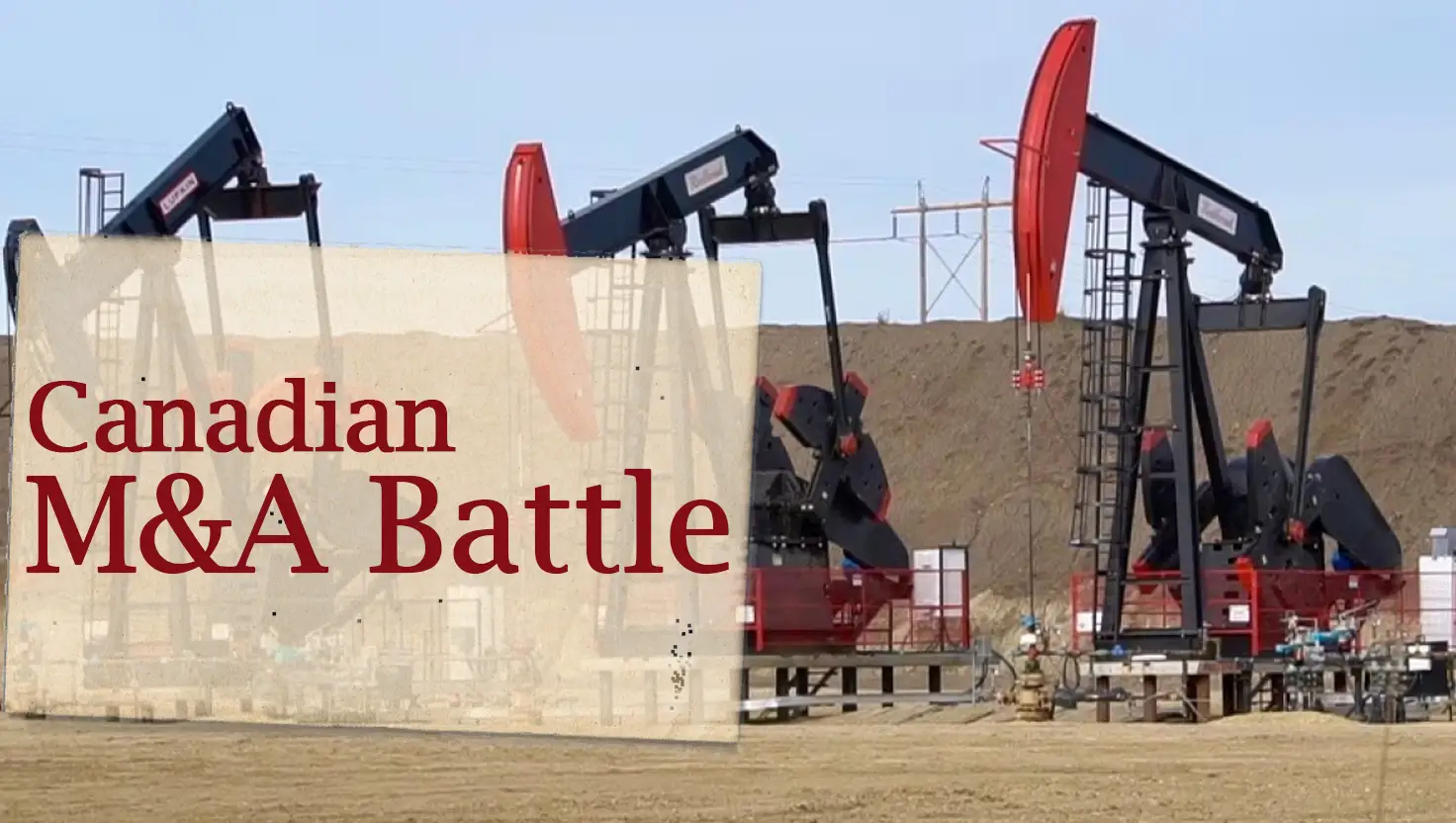
In a deal that could reshape Canada’s oil sands industry, Cenovus Energy and Strathcona Resources are locked in a high-stakes race to acquire MEG Energy a company valued at roughly C$8 billion. The Canadian M&A contest underscores deep divisions over how the fossil fuel sector can thrive amid global climate pledges and uncertain long-term demand for oil.
At the heart of this Canadian M&A drama lies the question of scale. Both Cenovus and Strathcona see MEG Energy as a critical asset for consolidating their oil sands portfolios.
Cenovus, already one of Canada’s largest integrated oil producers, aims to expand output while streamlining operations in northern Alberta. Strathcona, a rapidly growing private firm backed by Waterous Energy Fund, wants to transform itself into a top-tier oil sands competitor.
According to industry analysts, MEG’s strong production base and modern facilities make it a coveted target. Its Christina Lake project, known for its efficiency and lower emissions intensity, fits neatly with both bidders’ ambitions to sustain profitability even as pressure mounts to cut carbon.
“Whoever wins MEG gets not just barrels but a foothold in the fossil fuel future,” said one Calgary-based energy strategist. “It’s a power play inside Canada’s most contested industry.”
The Canadian M&A race comes at a time when global energy markets are torn between two realities: ongoing reliance on oil and a rapid shift toward cleaner energy. The International Energy Agency (IEA) projects that oil demand will peak before 2030, yet developing economies continue to consume record amounts.
For Canadian producers, that paradox creates strategic tension. On one hand, companies must continue investing to remain competitive. On the other, they face growing investor pressure to prove climate alignment and emissions accountability.
Cenovus CEO Alex Pourbaix has repeatedly argued that Canada’s oil sands can “produce cleaner, more responsibly developed barrels.” Meanwhile, Strathcona’s leadership believes consolidation is the only way to preserve efficiency in a carbon-constrained world. Both are positioning themselves as part of a fossil fuel future that still values low-cost, low-emission output even as renewable investment accelerates.
A major subtext of this Canadian M&A contest is carbon performance. MEG Energy has invested heavily in steam-assisted gravity drainage (SAGD) technology, which reduces emissions per barrel. Both Cenovus and Strathcona tout commitments to carbon capture, utilization, and storage (CCUS) projects to meet Canada’s 2030 emissions targets.
Still, environmental groups remain skeptical. They warn that merger-driven growth could delay the sector’s transition to cleaner energy. Greenpeace Canada labeled the deal “a distraction from decarbonization,” arguing that consolidation keeps capital locked in oil assets rather than renewables.
Industry executives counter that larger firms can invest more aggressively in carbon-reduction technologies, spreading costs across bigger production bases. “Scale creates the financial muscle for innovation,” said a former MEG executive. “This isn’t doubling down on oil it’s preparing for lower-carbon oil.”
Investors are closely watching how this Canadian M&A saga plays out. MEG shares surged following early reports of interest from both bidders, rising more than 20 % in a week. Analysts say the price could climb further if a bidding war unfolds.
Cenovus, with its stronger balance sheet and integration from refining to retail, is seen as the frontrunner. But Strathcona’s aggressive growth strategy and backing from private equity bring an element of unpredictability.
“This is more than a simple acquisition,” said Bloomberg’s senior energy correspondent. “It’s a proxy for how investors view the longevity of Canada’s oil sands a test of confidence in the fossil fuel future.”
Secondary keywords such as energy merger, MEG Energy acquisition, and oil sands consolidation have dominated analyst commentary in recent weeks, illustrating how financial markets still see opportunity in hydrocarbons even as governments talk transition.
The deal also reverberates beyond corporate boardrooms. Alberta’s government, heavily reliant on resource royalties, views consolidation as a stabilizing force. A stronger, more efficient oil sands sector could preserve jobs and revenue as global competition tightens.
At the federal level, however, Ottawa’s climate policies could complicate the path forward. The forthcoming cap on oil and gas emissions and tightening investment disclosure rules mean that whoever acquires MEG will face intense scrutiny.
Energy Minister Jonathan Wilkinson has repeatedly said Canada’s resource companies “must adapt faster to the low-carbon transition.” Yet the current Canadian M&A surge suggests companies are betting that oil demand will remain resilient for at least another decade long enough to justify big-ticket acquisitions.
This merger battle highlights a central paradox: Canada’s oil sands are both an economic pillar and a climate challenge. The Canadian M&A wave is part of a broader global pattern traditional energy giants consolidating to weather transition risks and maximize efficiency.
Experts argue that the eventual winner, whether Cenovus or Strathcona, will need to balance shareholder returns with environmental accountability. That means larger investments in carbon capture, methane reduction, and potentially hydrogen or renewable fuel diversification.
“Canada can’t afford to be left behind,” said an economist at the University of Calgary. “If the oil sands don’t evolve, capital will flow elsewhere. But consolidation might buy time and money for innovation.”
Analysts expect MEG’s board to make a decision by late fall 2025. If Cenovus wins, the deal would cement its dominance as one of North America’s top integrated energy producers. If Strathcona prevails, it would mark one of the biggest private-equity-backed energy acquisitions in Canadian history.
Either outcome will shape how the country navigates its fossil fuel future, balancing the need for competitiveness with the urgency of climate commitments. The broader message from this Canadian M&A story is clear: the battle for MEG Energy is about more than money it’s about defining what Canada’s energy future looks like in an era of transition.