Physical Address
304 North Cardinal St.
Dorchester Center, MA 02124
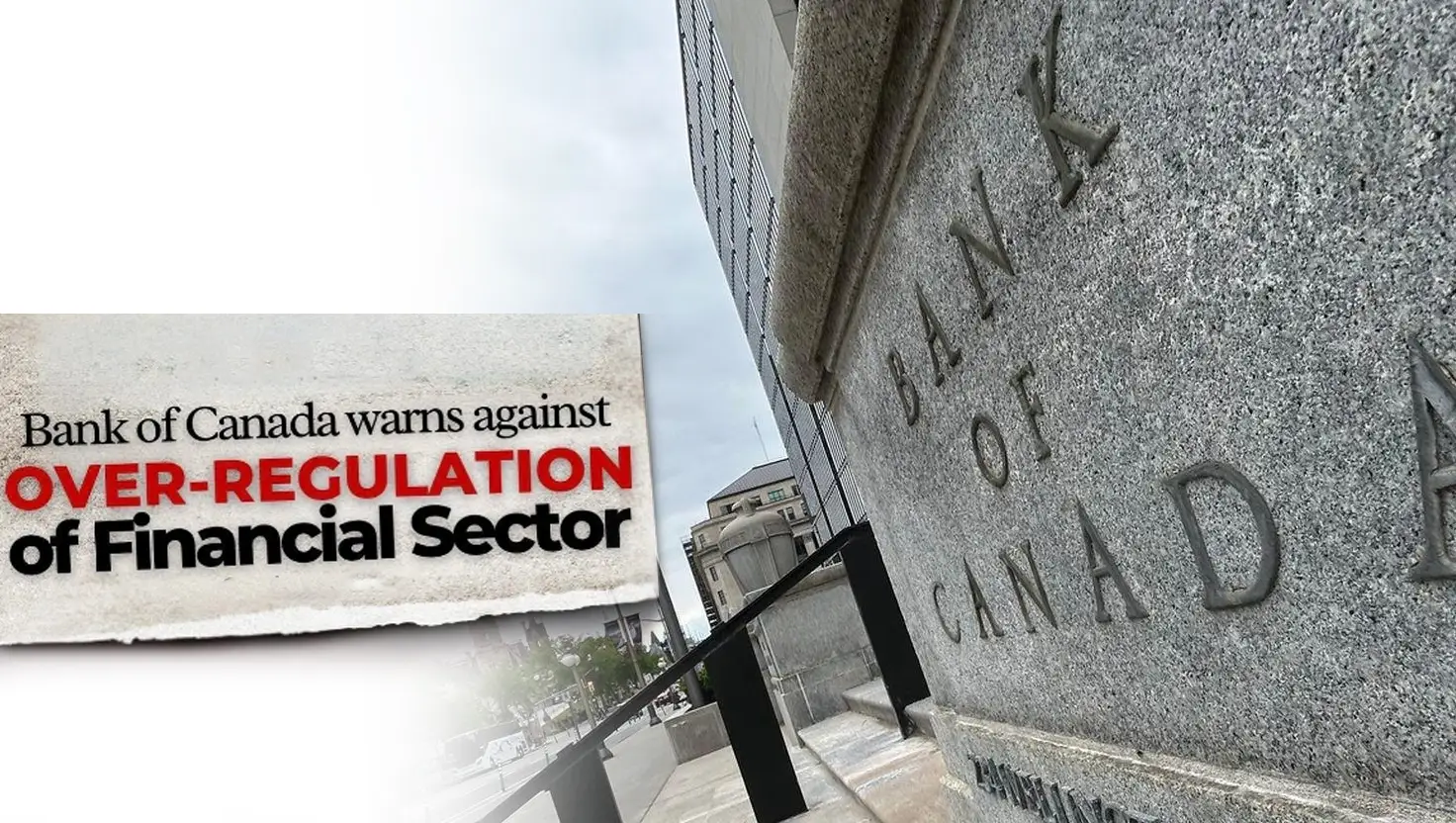
In a clear, urgent tone, the Bank of Canada warns over-regulation risks suffocating financial innovation across the country. During remarks in Toronto, senior deputy governor Carolyn Rogers cautioned that excessive regulatory pressure could hamper competition, stifle new entrants, degrade productivity, and limit consumer choice in Canada’s highly concentrated banking system.
When the Bank of Canada warns over-regulation, it’s signaling a deeper tension: how to protect financial stability without suffocating the very dynamism regulators hope to foster. Rogers highlighted that Canada’s financial sector is among the most consolidated in the world, with six banks controlling about 93 % of all banking assets. Reuters
In such an environment, over-regulation can become a barrier to entry for smaller players and fintechs, restrict novel financial services, and discourage forward-thinking capital deployment. At a time when global competition is intensifying, Canada cannot afford regulatory drag.
Rogers pointed to several domains where over-regulation is already showing harmful effects:
Rogers urged policy makers to ask: Are regulations too tight? Are rules preventing beneficial disruption rather than preventing risk?
One of the themes Rogers emphasized is the link between over-regulation and Canada’s productivity shortcomings. She noted that Canada’s labor productivity has been flat or declining in multiple recent quarters a trend she said weakens resilience to shocks, including from U.S. trade policy. Reuters
In her view, financial sector innovation is not just about banks gains in lending, payments, and capital markets ripple outward across the economy. If regulatory constraints constrict growth in finance, the drag spreads.
Rogers cited a number of ongoing initiatives that could help counter over-regulation:
These reforms would serve as counterweights to overregulation, enabling innovation while preserving prudent oversight.
Of course, the push to relax regulation is not without objections:
Rogers acknowledged these tensions, emphasizing that regulatory frameworks should be frequently revisited to avoid ossification. She urged policymakers “reasonable calls for reflection” on whether rule complexity is exceeding its usefulness. Reuters
For readers and stakeholders, here are some signs that the overregulation debate is translating into real change:
If overregulation recedes, competition and service innovation may become more visible in everyday banking and finance.
Below are verified sources you can consult for deeper context and to verify statements: