Physical Address
304 North Cardinal St.
Dorchester Center, MA 02124

Ontario cancels Starlink contract after Premier Doug Ford cites unfair trade pressure this decision marks a striking move in the escalating Canada–U.S. trade war.
Ontario cancels Starlink contract as a direct response to U.S. tariffs on Canada, signaling that provincial procurement decisions will now serve as tools in trade diplomacy. Premier Doug Ford told reporters, “Ontario won’t do business with people hell-bent on destroying our economy.”
Under the agreement, Starlink was to deliver satellite internet to some 15,000 remote Ontario households. But by cancelling the deal, Ontario cancels Starlink contract and removes its commitment. As part of the same package, Ontario announced it will bar U.S. companies from winning provincial contracts until tariff policies shift.
“This is not mere symbolism,” said Ford, “we are asserting leverage in a full-blown Ontario trade dispute with Washington.”
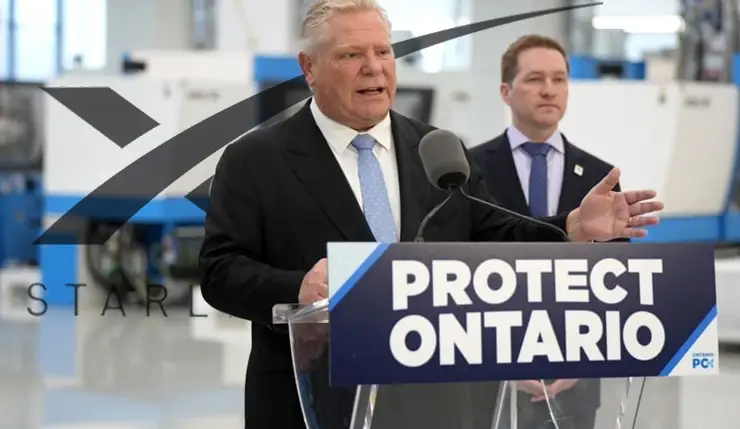
The decision that Ontario cancels Starlink contract forms just one piece of a larger Doug Ford trade retaliation blueprint. By forbidding U.S. firms from competing for provincial contracts, Ontario is channeling public money to press political pressure. Ford emphasized that Ontario’s government and agencies spend about C$30 billion yearly on procurement, making exclusion of U.S. companies a powerful lever.
Ford further stated that Ontario cancels Starlink contract as a message to Elon Musk’s enterprises: U.S. firms benefiting from tariff policies should face consequences. The Starlink internet deal cancellation is, in his view, a logical extension of that principle.
Procurement action isn’t new in trade conflicts, but Ontario’s willingness to target a high-profile contract especially one intended to boost connectivity in underserved regions represents a rare provincial escalation in the Canada–U.S. trade war.
Ontario cancels Starlink contract against a backdrop of sweeping U.S. tariffs 25 % on most Canadian exports, and 10 % on oil products. Ottawa responded with retaliatory tariffs across C$155 billion in U.S. goods. In that climate, Ford intensified his stance, turning provincial authority into a counterattack.
Critics say this play embodies the extreme end of Doug Ford trade retaliation tactics. Some warn that by invoking procurement bans, Ontario opens the door to legal challenges or contract liabilities. Others argue that remote communities may now be left in limbo without the Starlink internet deal to count on.
Still, in Ford’s framing, Ontario cancels Starlink contract not as an act of spite, but as a calibrated strike in the Ontario trade dispute. He hopes Washington will reconsider its tariff imposition if pressured at multiple jurisdictional levels.
Federal and bilateral dynamics. Prime Minister Justin Trudeau’s government has supported Canada’s retaliatory arsenal but must tread carefully provinces acting unilaterally risk fracturing negotiating coherence. The federal government must balance asserting national interests with allowing provincial flexibility in Canada–U.S. trade war tactics.
The U.S. federal response has been coy. White House economists expressed surprise and downplayed the import of Ontario’s move, suggesting the conflict over U.S. tariffs on Canada is misunderstood. But for stakeholders in D.C., the Ontario cancels Starlink contract move is a sharp escalation that directly implicates U.S. corporate interests.
Local and industry backlash. Some observers criticize Ford’s approach as reckless toward underserved regions. If Starlink had been the fastest route to improved connectivity, its removal could delay broadband rollout in remote parts of northern Ontario. By cancelling this agreement, Ontario cancels Starlink contract and may force a slower, costlier alternative.
Meanwhile, business groups warn that targeting U.S. firms in procurement could discourage investment, especially in sectors reliant on cross-border supply chains. A company with an American parent may suddenly be frozen out of future projects despite longstanding local presence.
In Québec, Premier François Legault reportedly rejected replicating Ford’s approach he would not cancel his own Starlink arrangements. That divergence underscores how the Ontario trade dispute tactics may not carry seamlessly across provinces.